For years, Indian cricket ran on prestige, not process. Administrators held office for decades. State associations multiplied like franchises. And the wealthiest cricket board in the world operated without meaningful accountability. Then came the Justice RM Lodha Committee.
From 2015 to 2016, there were 38 meetings about reshaping Indian cricket's administration. What followed was a decade of resistance, acknowledgment, and progressive advancement. By 2026, the scene looks completely different.
The question is clear: How have BCCI reforms changed Indian cricket? And what does this mean for players, chairmen, and the millions who take after the amusement?
Let’s break it down.
The Problem Before the Reforms
To understand what changed, you need to know what broke.
Before 2016, many cricket associations existed within a single state. Maharashtra had three; Gujarat had three. Each carried voting rights. This gave certain regions disproportionate influence over BCCI decisions.
Read Also: Race to the Semis: Pakistan’s Qualification Hopes Hinge on England
Age limits didn’t exist. Directors like N. Srinivasan held many roles at once. He was the BCCI president, IPL chairman, and owner of Chennai Super Kings. The strife of intrigue was unmistakable to everybody but those in control.
Term limits were absent. People stayed in office for decades. The same people made decisions year after year. Justice Lodha later called this a “monopoly.” It blocked new ideas.
The 2013 IPL wagering and spot-fixing embarrassment uncovered the decay. Authorities caught Gurunath Meiyappan, Srinivasan’s son-in-law, for illegal betting. This showed the system needed fixing.
The Lodha Committee’s Core Recommendations
The Supreme Court appointed Justice Lodha in January 2015. In the year that followed, the committee met 38 times. It submitted its final report in January 2016. Here are the reforms that actually changed things:
One State, One Association
This was the big one. The committee decided that each state can have one voting member. Railways, Services, and Universities were relegated to associate membership.
Why this mattered: It broke the voting power concentration. Maharashtra went from three votes to one. Gujarat followed suit. Elections became more competitive. Regional dominance diminished.
Term Limits and Cooling-Off Periods
No BCCI office-bearer could serve more than three terms. They capped each term at three years. After two consecutive terms, a mandatory cooling-off period applied.
The logic was simple: prevent anyone from entrenching themselves. Bring in fresh perspectives. Make cricket administration a service, not a career.
Age Cap of 70 years
No one above 70 could hold office. This might look easy, but it removed several long-serving administrators who had stayed on after retirement age.
No Minister or Government Servant
You couldn’t be a minister or government worker and hold a BCCI office. This kept cricket administration safe from political interference.
Conflict of Interest Rules
The organization appointed an Ethics Officer to handle conflict-of-interest cases. No more wearing many hats. You either administered or owned a franchise, not both.
BCCI Under RTI
The committee recommended bringing BCCI under the Right to Information Act. The push for transparency met some resistance, but it changed how the board viewed public accountability.
The Implementation Battle
Reforms don’t tool themselves. Between 2016 and 2018, BCCI faced ongoing resistance. In October 2016, the board had a special meeting. They decided not to accept the age cap or the one-state-one-vote rule. The Supreme Court issued a strong response.
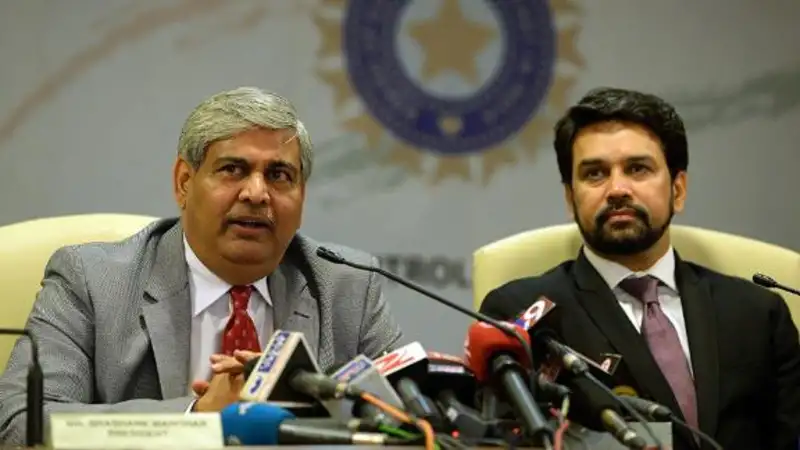
In January 2017, the court removed BCCI president Anurag Thakur and secretary Ajay Shirke for not following rules. The board designated a Committee of Chairmen (COA) to run it.
That sent a message: the court was serious.
By mid-2017, BCCI started adopting changes. They drafted new constitutions. Races were held beneath the unused system. The ancient watch slowly lost its prominence.
The Cooling-Off Clause Evolution
Here’s where things got interesting.
In August 2018, the Supreme Court allowed BCCI to amend some clauses. The cooling-off period, once required after two terms, has been relaxed. This let Sourav Ganguly and Jay Shah stay as president and secretary longer than the original rules allowed.
Justice Lodha, in a 2022 interview, reflected on this without bitterness. It’s the evolution of new jurisprudence, he said. His central point remained: the reforms ensured no monopoly. Even if the court later modified them, the principle of preventing entrenched power had taken root.
How Player Contracts Evolved
While governance changed at the top, player compensation underwent a parallel transformation.
In 2004, BCCI introduced central contracts for the first time. The top retainer was Rs 50 lakh. By 2010-11, it crossed Rs 1 crore. By 2016-17, Grade A players received Rs 2 crore.
You Must Also Like: Why Pakistan Cricket is Staring at "Financial Death" After India Boycott
Then came the 2017-18 leap. They introduced the A+ category with a ₹7 crore annual retainer. Virat Kohli, Rohit Sharma, Ravindra Jadeja, and Jasprit Bumrah occupied this tier. But 2026 brought another shift.
Reports in January 2026 confirmed that the BCCI plans to end the A+ category completely. The new structure would have three grades—A, B, and C.
Why? The logic matches the reform spirit: contracts should show current involvement, not past status. Players like Kohli and Rohit, now active only in ODIs, would move to Grade B (Rs 3 crore).
This isn’t about diminishing legends. It’s about aligning financial rewards with workload and future planning. The same principle that broke administrative monopolies now applies to player contracts.
Domestic Cricket’s Quiet Revolution
The reforms weren’t only about the top tier; domestic cricket saw meaningful changes too.
Match fees became structured and experience-based. A Ranji Trophy player with over 40 appearances earns ₹60,000 per day. A player with up to 20 matches earns ₹40,000 per day.
For a senior player reaching the Ranji final, season earnings can reach ₹25 lakh.
This matters. Two decades ago, domestic cricketers needed second jobs to survive. Today, a Ranji career offers genuine financial stability. Families no longer discourage talented kids from pursuing cricket.
The PACL Connection: Justice Lodha Beyond BCCI
The Justice Lodha name appears in another context, too.
In March 2026, the Enforcement Directorate returned assets worth Rs 15,582 crore to the Justice RM Lodha Committee. This was part of the PACL fraud case. The Supreme Court formed the committee in 2016. It manages asset sales to refund many defrauded investors.
This is the same Justice Lodha. The same commitment to restitution and accountability. Only the context is different—investor protection rather than cricket governance.
Total attachments in the PACL case have now reached Rs 27,030 crore, with Rs 48,000 crore still unpaid to investors. The work continues.
The Betting Recommendation That Didn’t Fly
One Lodha recommendation remains unimplemented: legalizing cricket betting.
The committee said betting is a $400 billion global business. Legalizing it would bring transparency and more tax revenue. India’s underground betting market has an annual estimate of $60 billion. Maintaining its illegal status means that it remains untaxed.
The recommendation made practical sense, but politically, it was a non-starter. No government has shown an appetite for it. The issue remains unresolved.
What the Reforms Actually Achieved
Let’s step back. Nine a long time after the Lodha report, what’s different?
Accountability: BCCI presently has an Ombudsman and a Morals Officer. Conflict-of-interest complaints are formally addressed.
Transparency: While the RTI scope still faces challenges, the board now offers more public disclosure than before.
Meritocracy: The one-state-one-vote runs the show and levels the playing field. Littler affiliations have an important say.
Fresh Leadership: Term limits and age caps brought new faces into administration. Former players now occupy roles before held by lifetime politicians.
Financial Discipline: The contract restructuring shows a willingness to make tough choices. It focuses on logic instead of tradition.
The Unfinished Agenda
Not everything is fixed.
The cooling-off modifications show reform isn’t permanent. Administrators found ways around restrictions. The tension between continuity and renewal remains.
Betting remains illegal. The underground market thrives. No revenue flows to the exchequer.
State associations still vary wildly in governance quality. Some run professionally; others still function as independent entities.
And the biggest challenge: sustaining reform beyond the judicial oversight that enforced it.
What This Means for You
If you’re following Indian cricket now, you’re seeing a different team than in 2013. The BCCI reforms transformed Indian cricket administration in three key ways:
-
Breaking monopolies—both administrative and regional.
-
Creating pathways—for players and new administrators
-
Linking reward to contribution—whether for players or office-bearers
The system isn’t perfect. No system is. But the direction has shifted.
When you see a Ranji player earning Rs 25 lakh for a season, that’s reform. When you see a former player administering without political backing, that’s reform. When contracts change because of real involvement instead of reputation, that’s reform.
Indian cricket still has problems, but governance isn’t the scandal it once was.
Final Thoughts
Justice Lodha said his committee used "the best governance principles" for cricket management. These principles shape Indian cricket. They include term limits, age caps, conflict-of-interest rules, and one state, one vote.
The travel from Lodha to 2026 appears something imperative: change works when implemented. The Supreme Court’s firm hand between 2016 and 2018 made compliance unavoidable. Without that pressure, resistance would have won.
BCCI reforms have permanently changed how Indian cricket is governed. The old era of lifetime administrators and regional vote banks is over. What replaces it is still evolving.
But it’s evolution in the right direction.