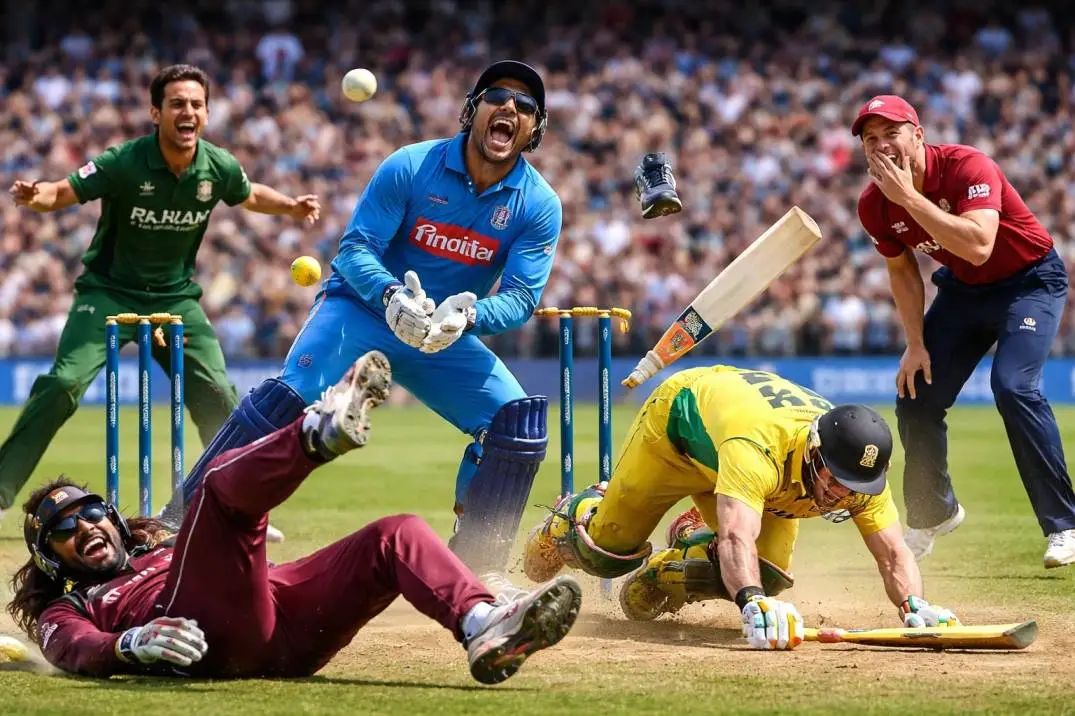
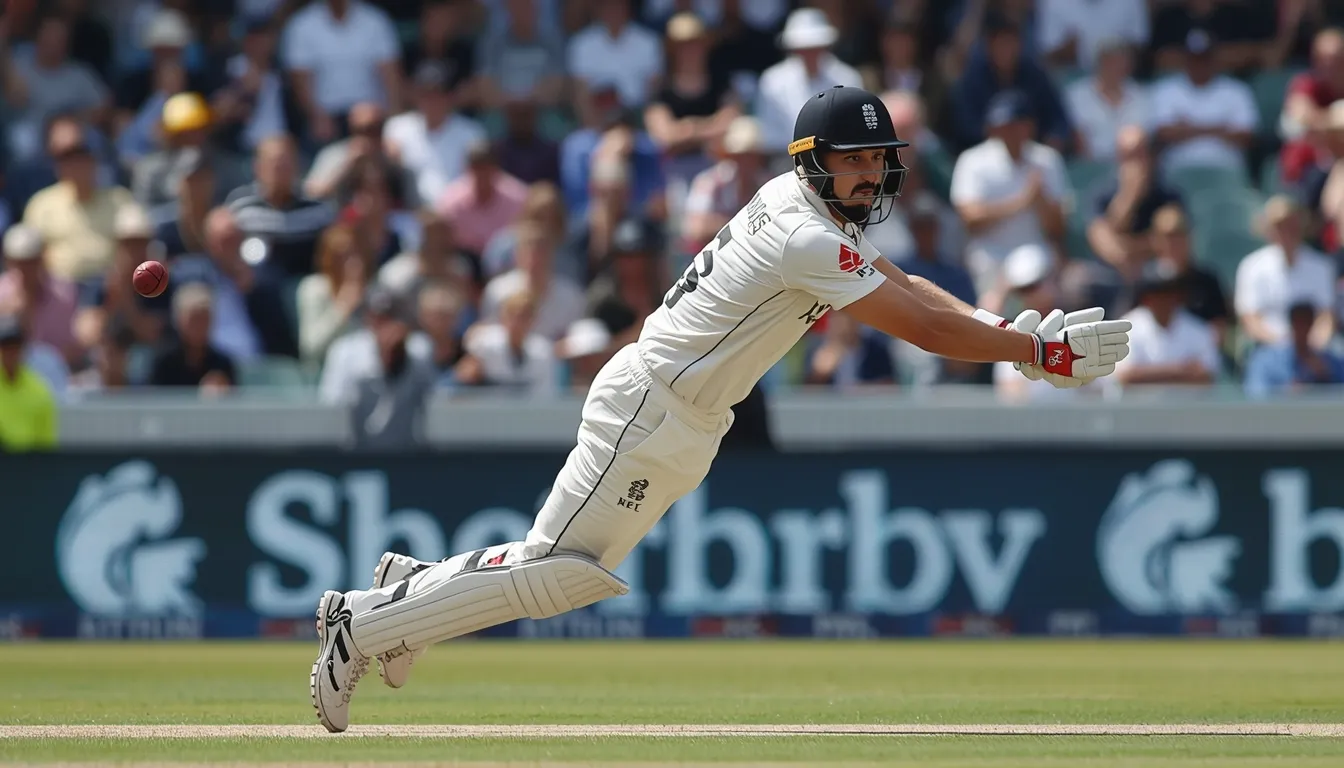
Alright, this is one of those topics I could talk about for hours. If you’ve watched sports long enough, you already know this feeling — the ball goes up, time slows down, and someone does something that shouldn’t be possible.
That’s what this piece is about.
Best Catches of All Time: Iconic Moments in Sports History
Some sporting moments age badly. Rules change. Players fade. Records get broken.
Great catches don’t.
The best catches of all time still stop conversations mid-sentence. They still get replayed in slow motion. They still make fans argue years later about whether anything better has ever happened.
Read Also: Best Sixes Ever Caught on Camera In Cricket History
A catch isn’t just a skill. It’s instinct, nerve, timing, and often a bit of madness. Miss it, and nobody remembers. Take it, and you’re part of history.
I’ve watched thousands of matches across formats and eras. Most catches blur together. A few stay with you forever. Those are the ones worth talking about.
Why Catches Matter More Than We Admit?
Batting numbers are easy to track. Bowling spans tell a story. Fielding lives in moments. A great catch can:
-
Kill momentum instantly
-
Break a partnership
-
Silence a crowd
-
Lift an entire team
I’ve seen matches swing purely because someone at point or on the boundary decided to go all in. That’s why the best catches in cricket history often come with a story attached. Context turns skill into legend.
What Makes a Catch Truly Iconic?
Not every diving effort belongs in the conversation. The truly unforgettable ones usually tick a few boxes:
You don’t need all five. Two or three is enough if the timing is right.
Kapil Dev – 1983 World Cup Final
You can’t talk about iconic catches without starting here. Viv Richards was batting like he owned the day. India were wobbling. Kapil Dev ran back from mid-on, eyes fixed on the ball, backpedaling without a single glance at the rope.
He caught it over his shoulder.
You Must Also Like: Last Over Thrillers That Changed Cricket Matches Forever
No helmets. No boundary cushions. No instant replay. Just instinct. That catch didn’t just change a match. It changed Indian cricket forever.
Even today, when people list the best catches of all time, this one sits right at the top for meaning alone.
Ricky Ponting – World Cup 2003 vs England
This catch doesn’t look dramatic at first glance. That’s what makes it special. Ponting at backward point. Flintoff drives hard. Ponting sticks out one hand and the ball just stays. No celebration. No drama. Just a stunned batsman walking off.
This was pure anticipation. The kind you only get from elite cricket brains. It’s one of those moments every coach shows young fielders to explain that great catching starts before the ball is hit.
Jonty Rhodes – The Blueprint for Modern Fielding
Before Jonty, fielding was optional flair. After Jonty, it was mandatory. His catches in the covers and at point in the 1990s looked unnatural at the time. Full-stretch dives. Bullet throws. Unmatched energy.
While his run-out against Pakistan gets all the headlines, his catching set the standard. Every athletic fielder you admire today is part of his legacy. That’s why he always appears in any serious discussion of the best catches in cricket history.
AB de Villiers – Redefining What’s Possible
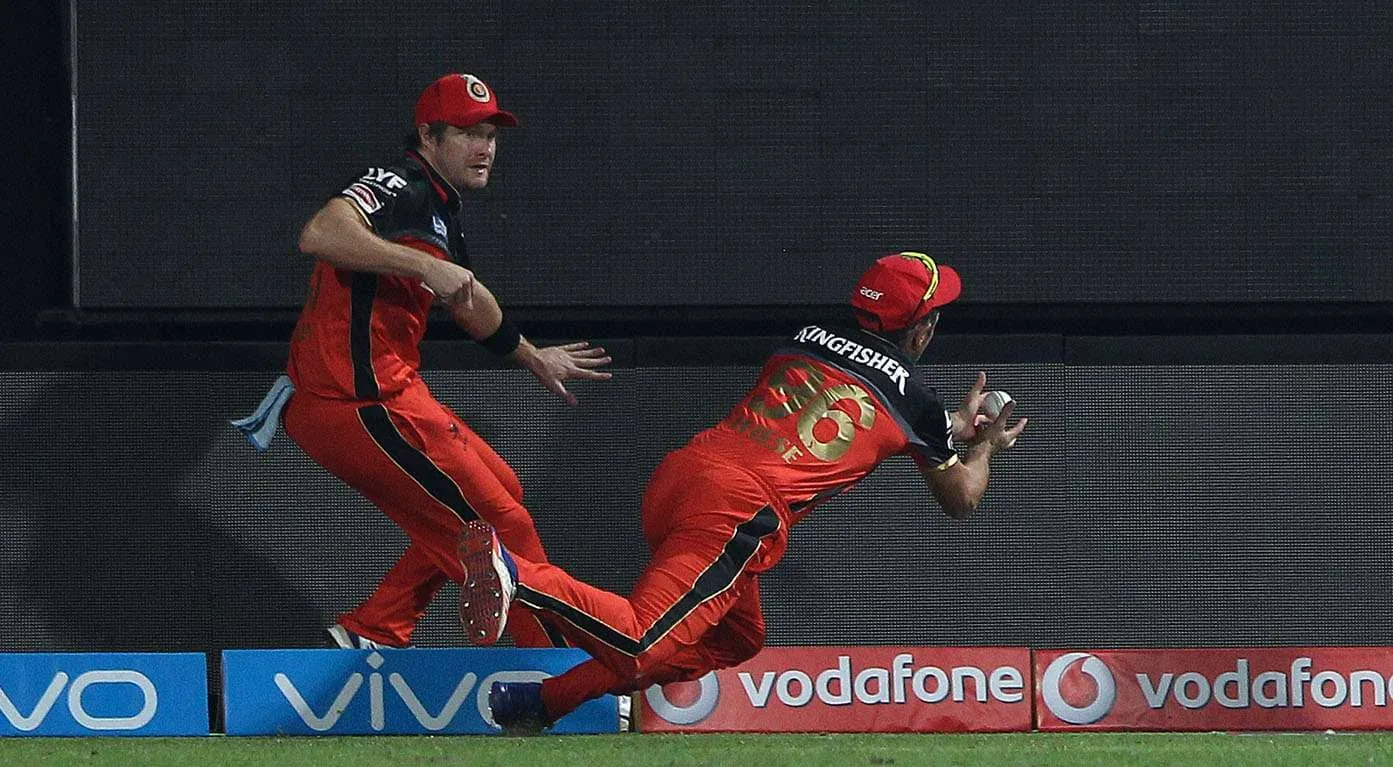
AB’s catches feel like optical illusions. One against Pakistan at point still gets shared every few months. Flying sideways, body parallel to the ground, hands soft as pillows.
What made AB special wasn’t just athleticism. It was control. He always looked balanced, even mid-air. You could fill an entire highlight reel with just his grabs. That’s why fans struggle to narrow him down to one for a Top 10 best catches in cricket history list.
Ben Stokes – One Hand, No Fear
The catch against South Africa in 2019 still makes people pause the replay. Running backward at long-on. Full sprint. One hand outstretched. Most players try to stop the ball. Stokes tried to catch it.
That confidence separates good fielders from unforgettable ones. The moment fit his career perfectly. Chaos. Commitment. Big match presence.
Glenn Maxwell – Boundary Riding Masterclass
Modern cricket has created a new type of catch. The “how did he stay inside?” category. Maxwell has made a habit of these. Jumping from beyond the rope, parrying the ball back in, and completing the catch with gravity working against him.
It looks rehearsed now, but it wasn’t always this common. Maxwell helped normalize it.
Paul Collingwood – Slip Catching Perfection
Not all great catches involve flying through the air. Some require hands like glue. During the 2005 Ashes, Collingwood in the slips was relentless. Edges flew. Balls stuck. Batsmen stopped driving.
Slip catching is cruel. You get fractions of a second. No second chance. That’s why the best slip catches belong in the same conversation as boundary stunners.
Suresh Raina – Close-In Brilliance
Raina made dangerous positions look comfortable.
Short cover. Point. Sometimes silly point.
I still remember an IPL catch where the ball was smashed straight at him. No flinch. Hands out. Gone.
Close-in catches test courage more than skill.
Raina had both.
Brendon McCullum – Energy on the Rope
McCullum’s boundary catches always came with attitude.
Full-speed sprint. Leap. Perfect timing. Controlled landing.
You felt his presence even when the ball wasn’t near him.
Fielding feeds off energy, and McCullum brought plenty.
Why Modern Fielding Keeps Raising the Bar?
Here’s something worth acknowledging. The average international fielder today is miles ahead of where the game was twenty years ago. Reasons are obvious:
That’s why debates about the best catches of all time get heated. New generations keep adding fresh contenders.
And honestly, that’s a great problem to have.
How to Watch a Catch Like a Purist?
Next time you see a stunner, don’t just look at the leap. Watch:
-
Starting position
-
First movement
-
Balance mid-air
-
Control on landing
Some catches look spectacular but are expected at that level. Others look simple but are brutally difficult.
Knowing the difference changes how you appreciate fielding.
The Catch That Stuck With Me
Personally, Kapil Dev’s still hits hardest. Not because I saw it live in HD. But because everyone who talks about it sounds the same — awe mixed with disbelief.
That’s how you know a moment transcended the game. The best catches in cricket history aren’t always about technique. They’re about timing and meaning.
A Thought Worth Ending On
Catches are cricket’s most honest moments. No stats padding. No conditions excuses. Just instinct and execution. For a second, everything freezes. Then either history is made or regret lasts forever.
That’s why we keep watching. That’s why we keep arguing. And that’s why the next great catch always feels like it might happen on the very next ball. If you want, I can:
Just say the word.