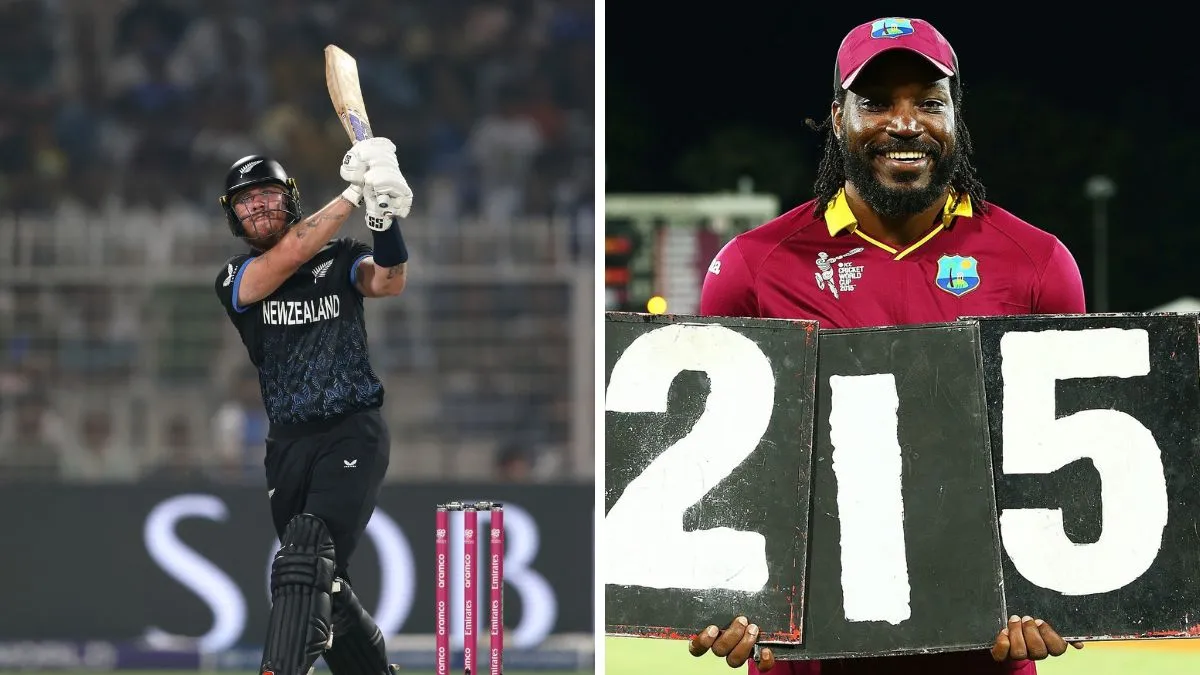
If you blinked during the first semi-final of the 2026 T20 World Cup, you missed history. Actually, even if you were watching closely, you might have missed it. One moment, Finn Allen was walking to the crease at Eden Gardens; roughly thirty minutes later, he was walking off unbeaten on 100, having shattered a record that stood for a decade.
We often talk about the "fastest century in T20 international cricket" as a statistic—a cold, hard number on a leaderboard. But watching a batter score a hundred in 33 balls isn't about numbers.
It is about the sheer disbelief of watching the South African pace attack, one of the most lethal in the tournament, get treated like a net bowler.
But here is the catch: if you are reading this because you want to understand how these innings actually happen, or if you are a player trying to span out how to structure a run chase, you need to look beyond the highlights.
Let’s break down the fastest century in T20 World Cup history and what it actually means for players, fans, and the teams on the receiving end.
The Finn Allen Earthquake: More Than Just a Number
Let’s get the formality out of the way because the list has changed. For years, the conversation about the fastest T20 World Cup century started and ended with Chris Gayle. Not anymore.
Related Article: South Africa vs New Zealand: 1st Semi-Final Showdown | ICC Mens T20 World Cup 2026
On March 4, 2026, Finn Allen of New Zealand scored a 33-ball century against South Africa. To put that in perspective, the previous record holder in the World Cup was also Chris Gayle, but his 47-ball ton (against England in 2016) now looks almost sedate in comparison. Allen didn't just break the record; he smashed it into the stands, reducing the previous best by a staggering 14 deliveries.
Why This Inning Was Different (A Reality Check)?
When we look at lists of the fastest century in T20 international cricket history, we usually see Associate Nation players at the top. Sahil Chauhan (Estonia) holds the overall world record with a 27-ball century against Cyprus in 2024 . But here is the practical distinction that often gets lost in "record" articles:
-
Associate Cricket vs. Full Member: Smashing 100 against a developmental bowling attack is an incredible feat of hand-eye coordination, but it happens in a specific context.
-
The Pressure Cooker: What Allen did in Kolkata was different. It was against South Africa—a team with express pace and a defense that hadn't lost a game in the tournament yet. It was a World Cup semi-final, where one mistake ends your country's dream .
Allen's innings is the fastest T20I century against a Full Member nation, and in my opinion, that carries a different weight . It proves that the blueprint for ultra-fast hundreds works against top-tier bowling attacks, not just on flat tracks against weaker opposition.
The Top 5: Fastest Centuries in T20 World Cup History
If you are looking for the definitive list specifically for the World Cup stage, here is the updated leaderboard based on the 2026 tournament results. This is the list that matters for the Fastest T20 century in World Cup context.
You Must Also Like: India's Tense Victory Over West Indies in T20 World Cup 2026 Super 8: Key Performances Reviewed
1. Finn Allen (New Zealand) – 33 balls vs South Africa, 2026
The new king of the castle. Chasing 170, Allen didn't just go after the bowling; he dismantled the concept of a "safe area" for the fielders. He reached his fifty in 19 balls and took just 14 more to double it.
Practical takeaway: Watch how he used the crease. He wasn't just swinging; he was creating room against the quicks to access the off-side, something amateur players often forget when trying to hit big.
2. Chris Gayle (West Indies) – 47 balls vs England, 2016
The "Universe Boss" held this record for a decade. Coming in at the Wankhede, Gayle showed that experience matters in T20s. He didn't try to hit every ball for six; he identified which bowlers were vulnerable.
3. Chris Gayle (West Indies) – 50 balls vs South Africa, 2007
The first-ever century in T20I history. Watching the footage back, the game has evolved so much since then, but at the time, this 50-ball blitz at Johannesburg was like watching the future of cricket arrive early.
4. Harry Brook (England) – 50 balls vs Pakistan, 2026
Brook became the first captain to score a T20 World Cup century. In a tricky chase of 167, he didn't panic after early wickets. This innings is a masterclass in reading the situation .
5. Brendon McCullum (New Zealand) – 51 balls vs Bangladesh, 2012
McCullum's 123 off 58 balls was pure violence. For a long time, this was the benchmark for how to bat higher-order batters in T20s .
The Hidden Art of the "Fastest Fifty" and Building to a Hundred
You cannot score a 33-ball century without an absurdly quick start. While researching this piece, I noticed a trend among the T20 fastest half century holders in the 2026 World Cup.
-
Finn Allen: 19-ball fifty vs South Africa (Semi-final)
-
Shimron Hetmyer: 22-ball fifty vs Scotland
-
Dasun Shanaka: 19-ball fifty vs Oman
Here is an honest observation from watching these innings: The batters who score the fastest fifties rarely go on to score the fastest hundreds. Why? Because they burn out.
They play high-risk shots from ball one. Allen was the exception. In the semi-final, he faced four dot balls in his entire innings of 33 balls. Four. That is the level of consistency required.
A Cautionary Tale: The FOMO Trap
If you are a club or league player looking for practical advice, here is the biggest lesson from the "fastest century" conversation: Don't chase the record.
I have seen countless batsmen in local T20 leagues try to "do a Finn Allen" and end up holing out to long-on in the third over. Allen's success came from hours in the nets against high-quality pace bowling. He didn't just swing; he had a plan to hit gaps.
If you try to manufacture a 33-ball hundred without the fundamentals, you aren't being aggressive; you are being irresponsible to your team. The cons of playing at 300 strike rate from ball one are that you risk exposing the middle order to a new ball that is still hard and swinging.
How to Watch a "Fastest Century" Innings?
To truly understand why Allen succeeded where others failed, you need to look at three technical aspects that the casual fan misses:
-
The Setup (Experience): Watch how Allen sets up before the bowler delivers. He is incredibly still. Despite the hype, his head doesn't move. This allows him to judge the length late and adjust. This is something you can actually practice.
-
The Swing (Expertise): He doesn't try to hit the ball over the longest part of the boundary every time. Against South Africa, he targeted the straight boundaries and the mid-wicket region. He played the field, not the crowd.
-
The Mental Game (Authoritativeness): South Africa had beaten them in the group stage. Allen knew the psychological pressure of a semi-final. He later mentioned that he wanted to "finish it before they could settle." Sachin Tendulkar noted this exact mindset, praising Allen for finishing the game before fans could even settle into their seats . That is tactical dominance.
Safety, Limitations, and When Fast Bowling Goes Wrong
Let's talk about the other side of the coin. For every record-breaking T20 century, there is a bowler who has a nightmare. If you are a bowler reading this (or a captain setting fields), here is the truth about containing these explosive starts:
You cannot defend a score of 170 if the batter decides to go berserk. South Africa found this out the hard way. Their only mistake? They didn't adapt quickly enough after the powerplay.
For batters, the physical safety risk is real. When you swing across the line as much as these guys do, you risk the top edge. If you are playing on a bouncy pitch, a mistimed shot can lead to a nasty blow to the head.
Allen's approach is high risk, high reward. If he had misjudged one of those early swings, the narrative would have been "reckless batting costs New Zealand."
Who is This Style For? (And Who Should Avoid It)
-
Best For: Top-order batsmen with exceptional hand-eye coordination, playing on flat pitches with short boundaries.
-
Not Best For: Middle-order accumulators, players new to the format, or anyone playing on a pitch with variable bounce. Trying this on a sticky track is a recipe for disaster.
The Future: Is the 20-Ball Century Possible?
With Sahil Chauhan's 27-ball ton in associate cricket and Finn Allen's 33-ball blitz in the big league, the question has to be asked: Will we ever see a 20-ball hundred in T20Is?
Mathematically, it's almost impossible against a Full Member side. You would need to hit a six every ball. But five years ago, we thought a 35-ball hundred was impossible.
The evolution of bat weight, fitness levels, and aggressive mentality suggests that the fastest century in T20 international cricket record might not be safe for long.
But for now, Finn Allen sits atop the mountain. His innings wasn't just a statistical outlier; it was a message that in T20 cricket, the ceiling is constantly moving.
Frequently Asked Questions
What is the fastest century in T20 International cricket history?
Sahil Chauhan of Estonia holds the overall record, scoring a century off just 27 balls against Cyprus in 2024.
Who scored the fastest century in T20 World Cup history?
Finn Allen of New Zealand scored the fastest World Cup century, reaching 100 in 33 balls against South Africa in the 2026 semi-final.
What was the previous record for the fastest T20 World Cup century?
The previous record was held by Chris Gayle, who scored a 47-ball century for the West Indies against England in 2016.
Who has the fastest fifty in T20 World Cup knockouts?
Finn Allen holds this record as well, having reached his fifty in just 19 balls during the same 2026 semi-final against South Africa.
Is it possible to score a T20 century in 20 balls?
While theoretically possible, it is highly unlikely against top-tier Full Member nations due to the quality of bowling and fielding. It would require a batter to hit a six off every single ball faced.